
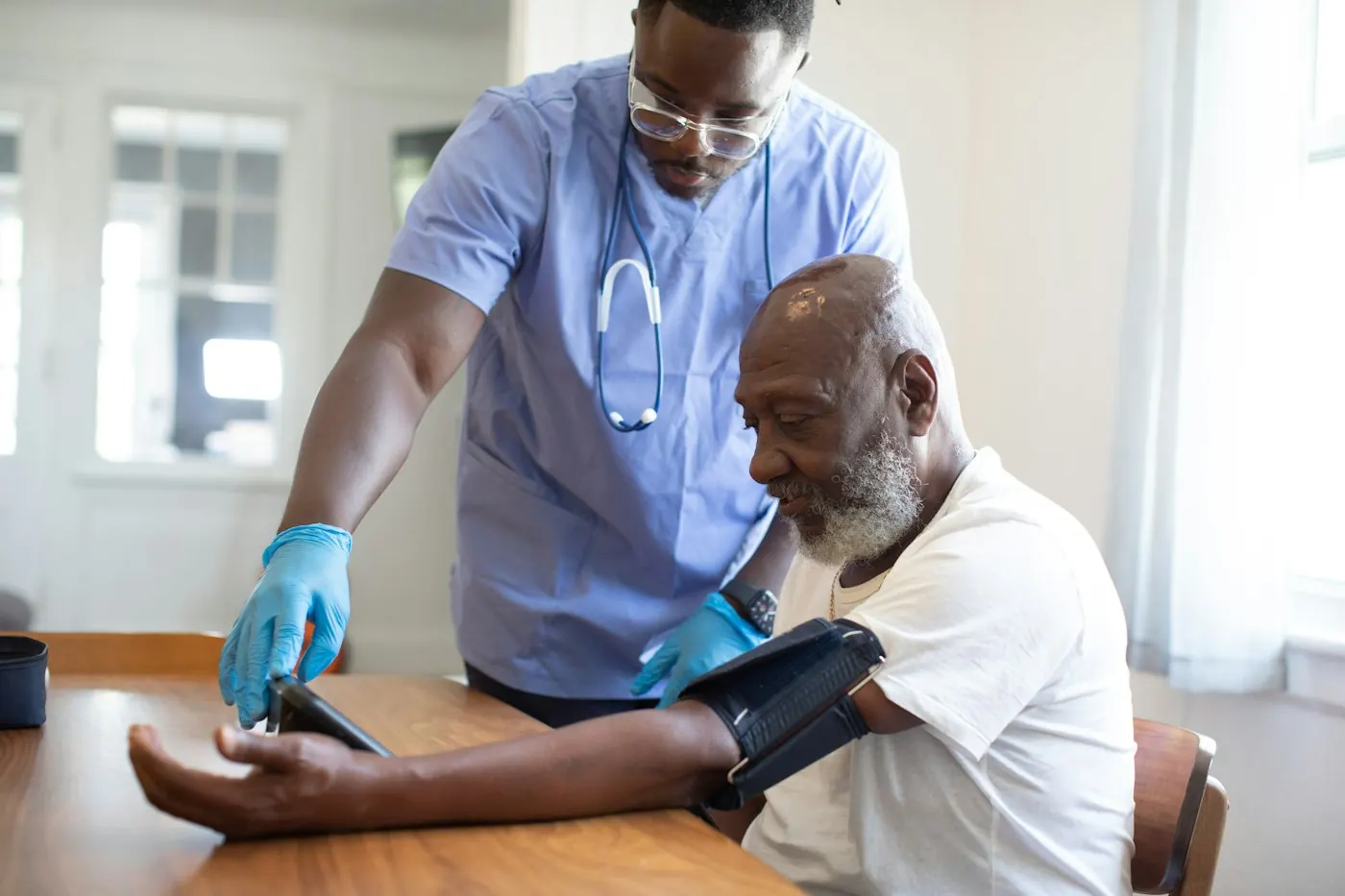
The riskiest days often come after the patient goes home.
Discharge summaries, medication changes and follow-up dates are handed over on paper. What happens next depends on the patient and family remembering all of it.
Follow-up by phone call
Coordinators call patients one by one, with no shared view of who is doing well and who is not.
Readings that never reach the doctor
Families measure blood pressure, sugar and oxygen at home, but the numbers stay in a notebook or a WhatsApp chat.
Chronic patients between OPD visits
Diabetes, hypertension and cardiac patients are seen every few months, with little visibility in between.
A between-visit layer for every department.
Using capabilities already live in Healthvox, set up per department and per condition.
Post-discharge and condition cohorts
Run post-discharge, cardiac, diabetes and hypertension cohorts, each with its own thresholds, review schedule and escalation rules.
Home vitals, automatically
Blood pressure monitors, glucose meters, pulse oximeters, smart scales and wearables that write to Apple Health or Health Connect, plus FreeStyle Libre CGM.
Learn moreAlerts only when something matters
Readings are compared with each patient's own baseline; only abnormal readings and worsening trends reach the care team.
Learn moreA priority list for coordinators
Patients ranked by risk of getting worse, across doctors and departments, so calls go to the right people first.
Reports and prescriptions read for you
Lab report PDFs from any lab and prescription PDFs or images become structured values and medication lists.
Video follow-ups and messaging
Follow-up consultations by video in the app, secure messaging, and a family care circle with the patient's permission.
How a hospital starts
- 01
Pick one department
Start with one cohort, such as cardiac or post-surgical discharges, and one team.
- 02
Enrol at discharge
Staff invite the patient, pair a device and capture consent in one flow before the patient leaves.
- 03
Follow from home
Readings and check-ins arrive automatically; deviations reach the department's coordinator.
- 04
Expand by department
Add cohorts and departments as the programme proves itself.
Where Healthvox fits in a hospital
- Post-discharge follow-up and chronic care cohorts
- A patient app for home vitals, video follow-ups and messaging
- Connected to FHIR-capable systems, or standalone beside your HIS
- A hospital information system (HIS), bed management or billing software
- An ICU or inpatient monitoring system
- An emergency response service — alerts support clinical follow-up, not emergency care
Frequently asked questions
Does Healthvox integrate with our HIS?
Healthvox has dedicated adapters for ten EMR systems, including Epic, Cerner and Meditech, and a configurable adapter that maps other systems' fields without new code. Many Indian HIS products differ; tell us which one you use and we will confirm what can be connected. Healthvox also works standalone beside your HIS.
Can different departments run separate programmes?
Yes. Each cohort has its own thresholds, review schedule and escalation rules, and every monitored patient appears on one dashboard sorted by who needs attention first, across providers, locations and programmes.
What devices do patients need?
Patients use the devices they already have where possible. Readings from devices that write to Apple Health or Health Connect, and FreeStyle Libre glucose data, arrive automatically.
How is pricing structured?
On the number of patients enrolled, month to month, with no implementation fee. Contact us for hospital pricing in India.
Start with one department's discharges.
Book a walkthrough and we will show how a post-discharge cohort would run for your hospital.
Doctors: sign up in the app and apply for provider access. Our team approves each account.