
 health
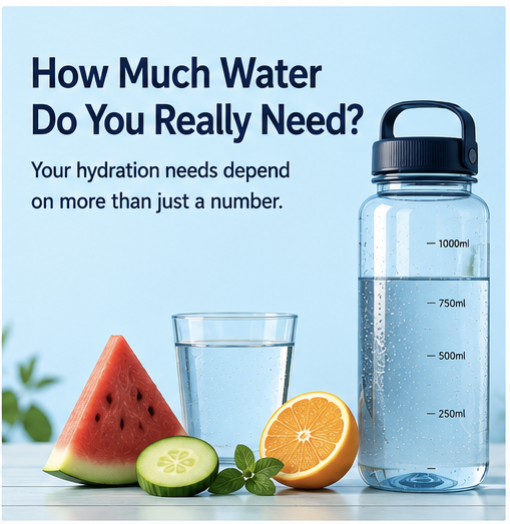
How Much Water Do You Really Need?
How Much Water Do You Really Need?
You've probably heard the rule: drink eight glasses of water every day.
It's simple and easy to remember.
But your body's actual hydration needs aren't quite that simple.
How much fluid you need depends on your body, activity level, environment, diet and other factors.
There's no perfect number for everyone
Your water needs can change significantly from one day to another.
A person sitting in an air-conditioned office may need less fluid than someone exercising outside on a hot afternoon.
You may need more fluids when you're:
-
Exercising
-
Spending time in hot or humid weather
-
Sweating heavily
-
Pregnant or breastfeeding
-
Experiencing vomiting, diarrhea or fever
Certain medical conditions and medications can also affect how much fluid you should consume.
That's why a universal "8 glasses" target isn't appropriate for everyone.
Water doesn't only come from water
Another common misconception is that all of your daily fluid has to come from glasses of plain water.
It doesn't.
Other beverages contribute to hydration, and food provides water too.
Fruit, vegetables, soups, yogurt and many other foods contain significant amounts of water.
So your total fluid intake is more than the number of times you refill your water bottle.
What about thirst?
For many healthy adults, thirst is an important signal that helps regulate fluid intake.
Rather than assuming that feeling thirsty automatically means you're already dangerously dehydrated, think of thirst as one of several useful signals from your body.
Other clues can include urine color, environmental heat, exercise and how much you've been sweating.
Your needs may also be different during prolonged exercise or illness.
Hydration and exercise
Exercise changes the equation because you lose fluid through sweat.
The amount can vary enormously between people and conditions.
Someone running outside in summer may lose much more fluid than someone doing a short indoor workout.
Long-duration or intense exercise may also involve electrolyte considerations, not simply water.
The goal isn't to drink as much water as possible.
In fact, excessive water intake can also be dangerous because it can dilute sodium levels in the blood.
Hydration is about balance.
Build a habit that works for you
Instead of obsessing over one universal number, build hydration into your routine.
Keep water accessible.
Drink with meals.
Pay attention during exercise and hot weather.
Notice your thirst.
And look at your hydration habits over the whole day rather than worrying about one missed glass.
If your doctor has advised you to limit or closely manage fluid intake because of a medical condition, follow that guidance rather than a generic hydration target.
HealthVox Tip
Use Water Tracking to understand your normal pattern. Combine it with activity and other health data to see when your hydration habits change.
The best hydration target is one that reflects you — not just a number printed on a water bottle.
HealthVox provides health and wellness information and is not a substitute for professional medical advice, diagnosis or treatment.