
 health
Breathing Techniques for Stress: Why a Longer Exhale Can Help
Breathing Techniques for Stress: Why a Longer Exhale Can Help
Your breathing changes when you're stressed — but changing your breathing can also influence how you feel.
Think about the last time something startled you.
Your breathing probably became faster.
Your heart rate may have increased.
Your muscles tightened.
These are normal responses coordinated partly by your autonomic nervous system.
The interesting part is that breathing is one of the few processes controlled automatically by your body that you can also deliberately change.
Your nervous system has different modes
The autonomic nervous system includes two important branches.
The sympathetic nervous system helps prepare your body for action — often called the "fight or flight" response.
The parasympathetic nervous system supports processes associated with rest and recovery.
Your breathing pattern interacts with these systems.
That's one reason slow, controlled breathing is commonly used in relaxation, meditation and stress-management techniques.
Try slowing your breathing
You don't need a complicated breathing routine.
Start by sitting comfortably and relaxing your shoulders.
Breathe gently through your nose.
Then allow your exhale to be slightly longer than your inhale.
For example:
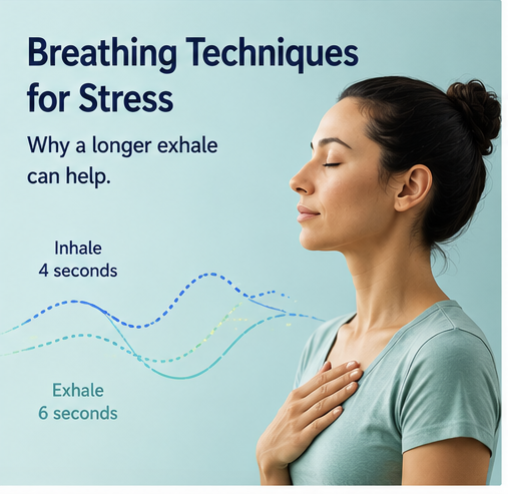
Inhale gently for 4 seconds.
Exhale gently for 6 seconds.
Repeat for a minute or two.
Don't force the breath or try to fill your lungs as much as possible.
The goal is comfortable, slow breathing.
If you feel dizzy or uncomfortable, return to your normal breathing pattern.
Why focus on the exhale?
Heart rate naturally changes slightly with breathing.
It tends to increase somewhat during inhalation and decrease during exhalation.
Slow breathing can interact with cardiovascular and autonomic processes involved in relaxation.
That doesn't mean a 4:6 breathing pattern is a medical treatment or that one specific ratio works best for everyone.
Think of it as a simple technique you can experiment with when you want to slow things down.
When can you use it?
Controlled breathing doesn't require a gym, wearable or special equipment.
You can try it:
Before a stressful meeting.
After a difficult conversation.
Before bed.
While waiting for an appointment.
During a short break at work.
Or simply when you notice that you're tense.
Even a couple of minutes can create a useful pause between feeling stressed and reacting to it.
Breathing isn't about getting a perfect score
You don't need to turn relaxation into another performance metric.
Some days you may feel calmer quickly.
Other days you may not.
That's okay.
The purpose is simply to give your body an opportunity to slow down.
Over time, you can also look at signals such as resting heart rate, HRV and sleep alongside your stress and recovery habits.
Try it now
Relax your shoulders.
Breathe in: 1…2…3…4
Breathe out: 1…2…3…4…5…6
Repeat gently for the next two minutes.
Then notice how you feel.
HealthVox Tip
Use HealthVox to explore how sleep, activity, stress and recovery relate to signals such as your resting heart rate and HRV.
Sometimes the most useful health intervention starts with something as simple as paying attention to your next breath.
HealthVox provides health and wellness information and is not a substitute for professional medical advice, diagnosis or treatment.